
Factory & Quality
The Factory That Actually Makes Your Order
Seven production lines, our own floor, and the checks that happen before anything gets packed. No trading desk in between.
How a Candle Actually Gets Made
Six steps between raw wax and a packed carton. Worth knowing because most of what can go wrong happens at steps three and four.
- 1
Wax blending & heating
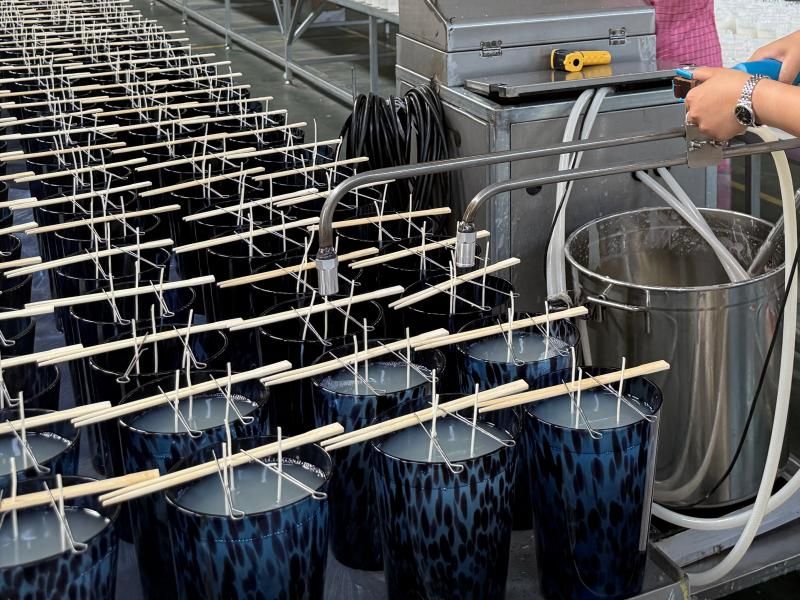
Every wax has its own melt and pour window. Drift out of it and the candle shrinks away from the glass or sets with a rippled top — visible only after it cools, which is why the blend and the heat are settled per wax type before a line runs, not during it.
- 2
Fragrance dosing
Fragrance goes in within a temperature band: too hot and the top notes flash off, too cool and the oil never binds to the wax and sweats out later. Loading stays inside IFRA limits for the category the candle is sold in.
- 3
Wick setting
Wick size is matched to the vessel diameter and the wax, then centred. Undersized and the flame tunnels a hole down the middle leaving half the wax unburnt; oversized and it smokes and blackens the glass. It is the single most common way a good-looking candle fails on a customer.
- 4
Pouring & curing
Poured, then left to cure. Cut the cure short to save a day and the surface sinks around the wick and the scent has not settled — the two complaints that come back weeks later, from the other side of an ocean.
- 5
Labelling & decoration
Labels, silk-screen and hot-stamp go on after cure, aligned against your approved artwork. A label a couple of millimetres off reads as a cheap product on a shelf, whatever is inside the glass.
- 6
Inspection & packing
Burn, scent and appearance are checked against the sample you signed off, then the order is packed for the freight route it is going on. Sea freight and air freight do not ask the same thing of a carton.
Want to see it rather than read about it?
We can send photos or a walkthrough video of the line running your format — and if you'd rather judge by the product itself, a sample is the faster route.
What Gets Tested Before It Ships
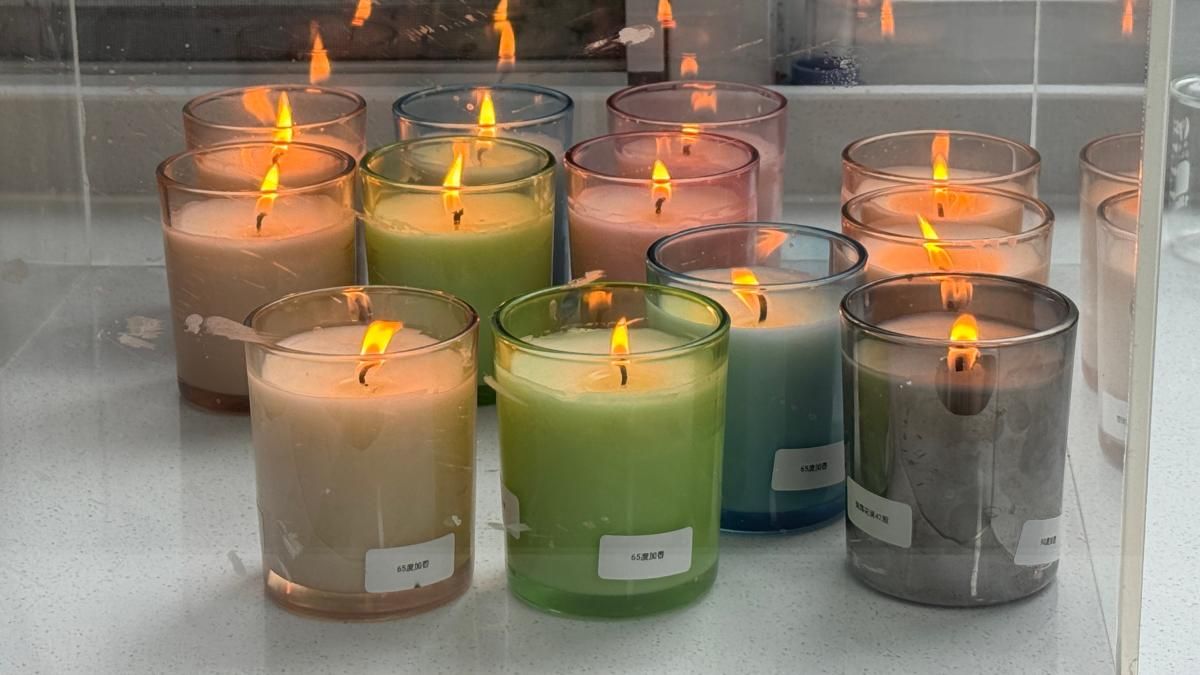
A candle can look perfect and still fail on someone's coffee table — the wick drowns halfway down, the scent vanishes after the first burn, the jar gets too hot to pick up. Those failures are found by burning them, not by looking at them.
- Burn-tested before packing — wick behaviour, tunnelling, soot and how hot the vessel runs
- Cold and hot throw checked against the sample you approved, not against a description of it
- Vessel and finish checked against that same signed-off sample before anything is boxed
- IFRA-compliant fragrances; CLP, UKCA, ASTM F2417 and Prop 65 supported by market; MSDS/SDS on request
The Floor, Not a Stock Photo
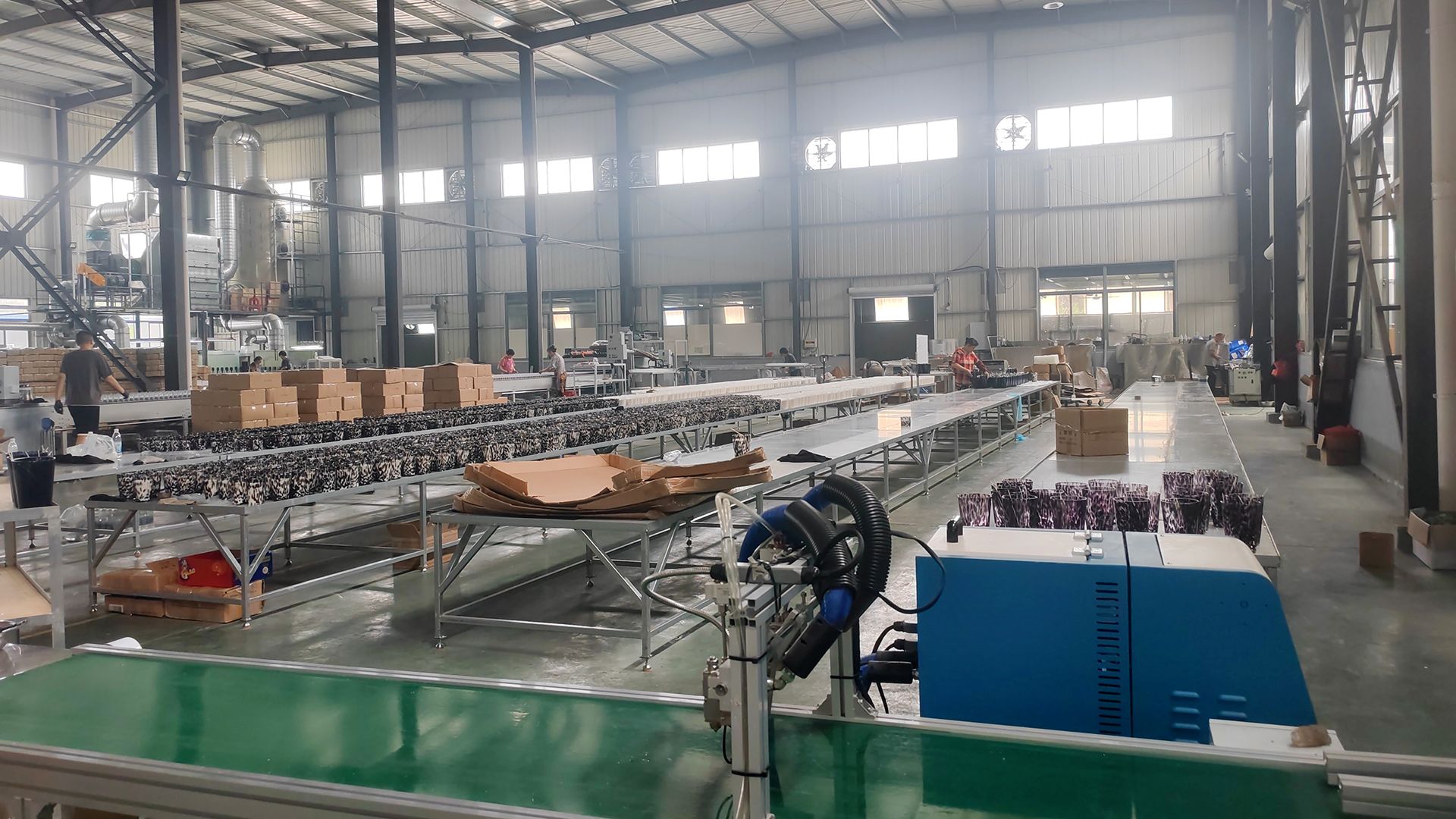
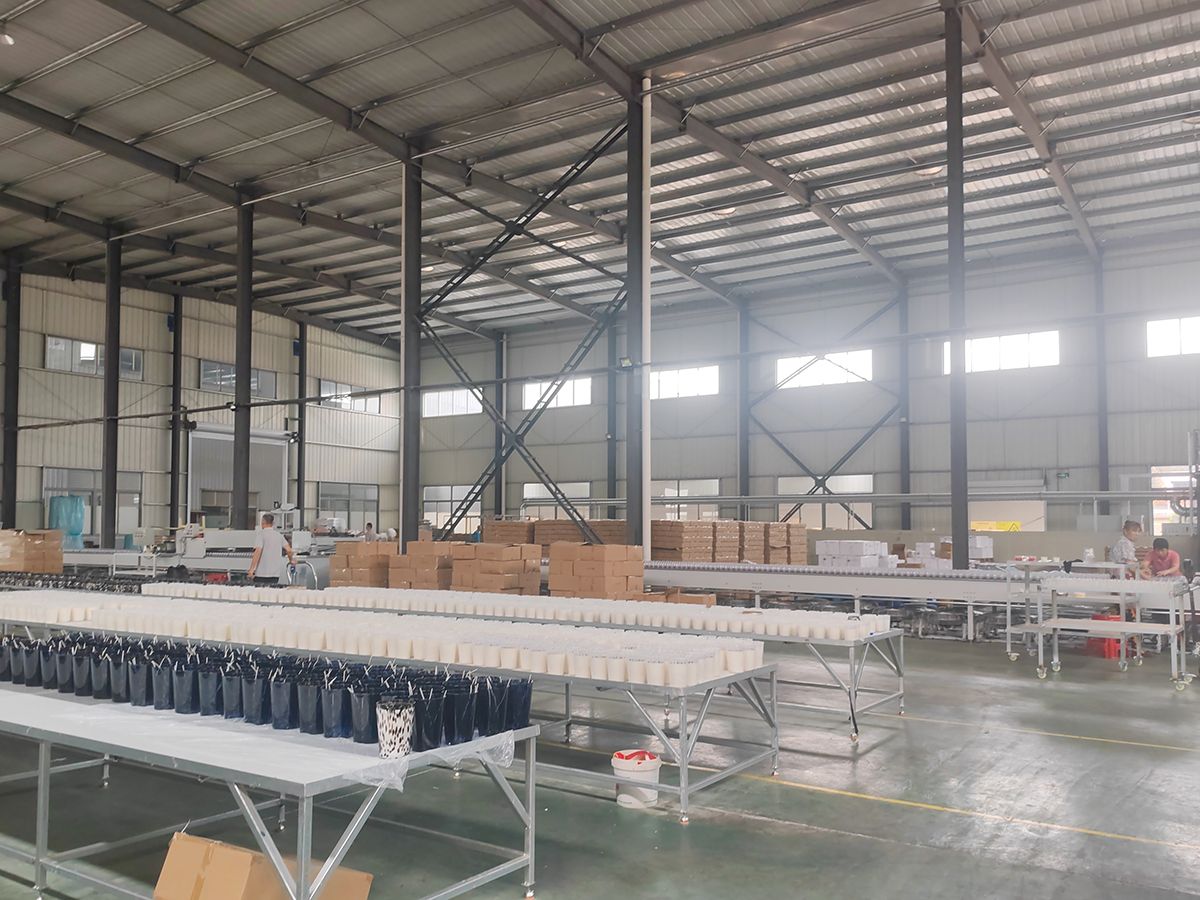
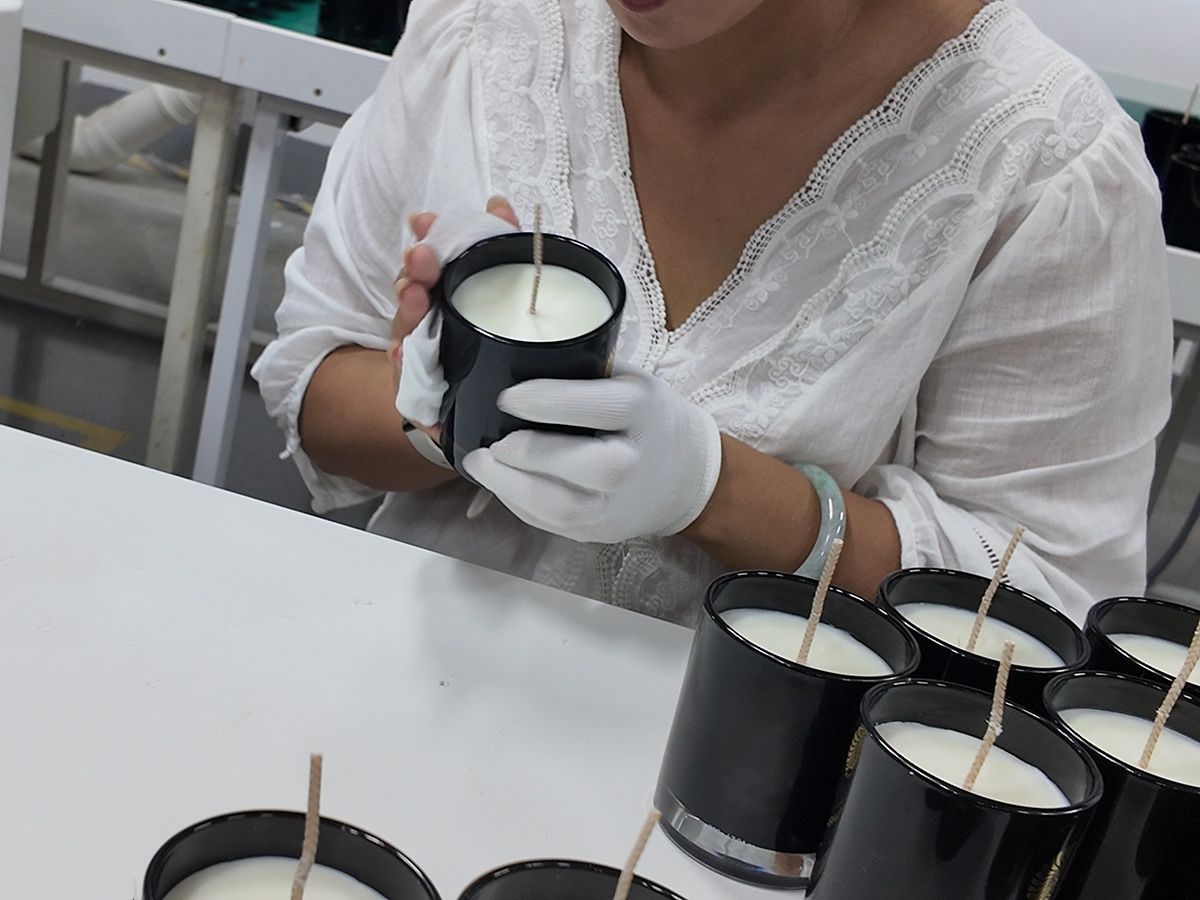
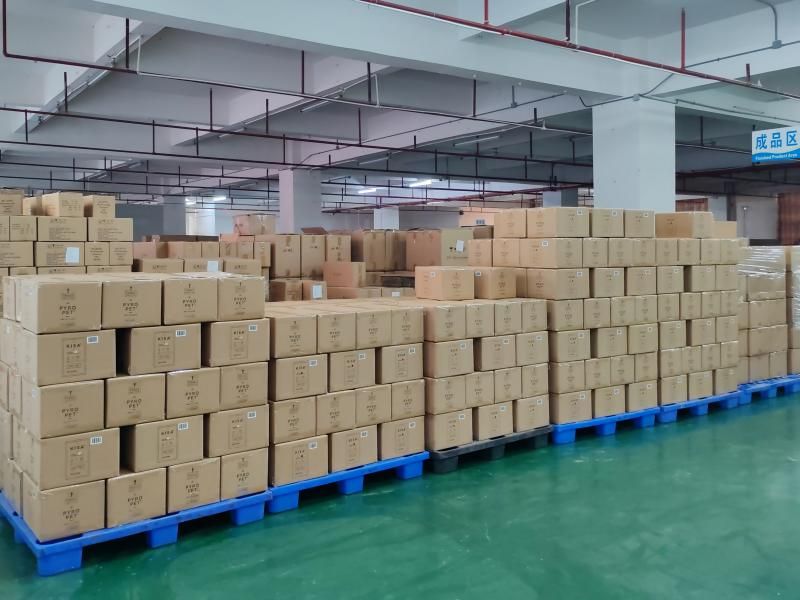
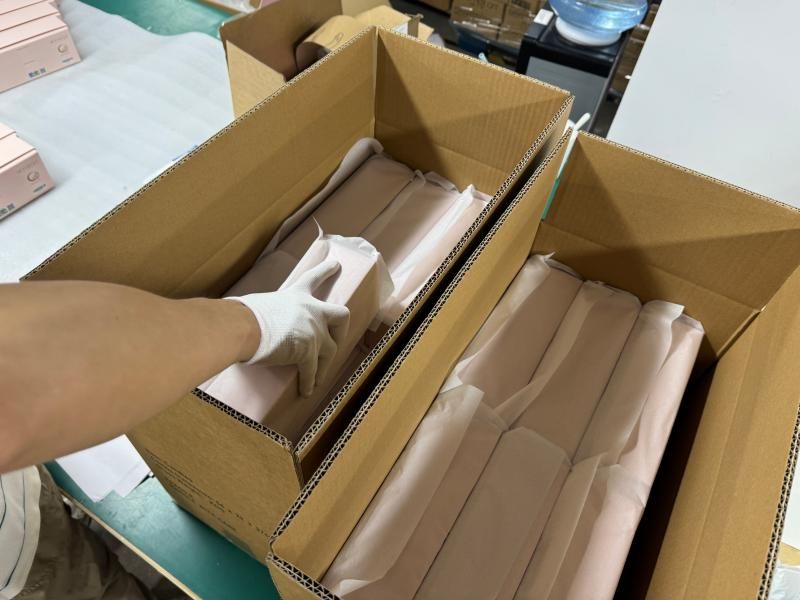
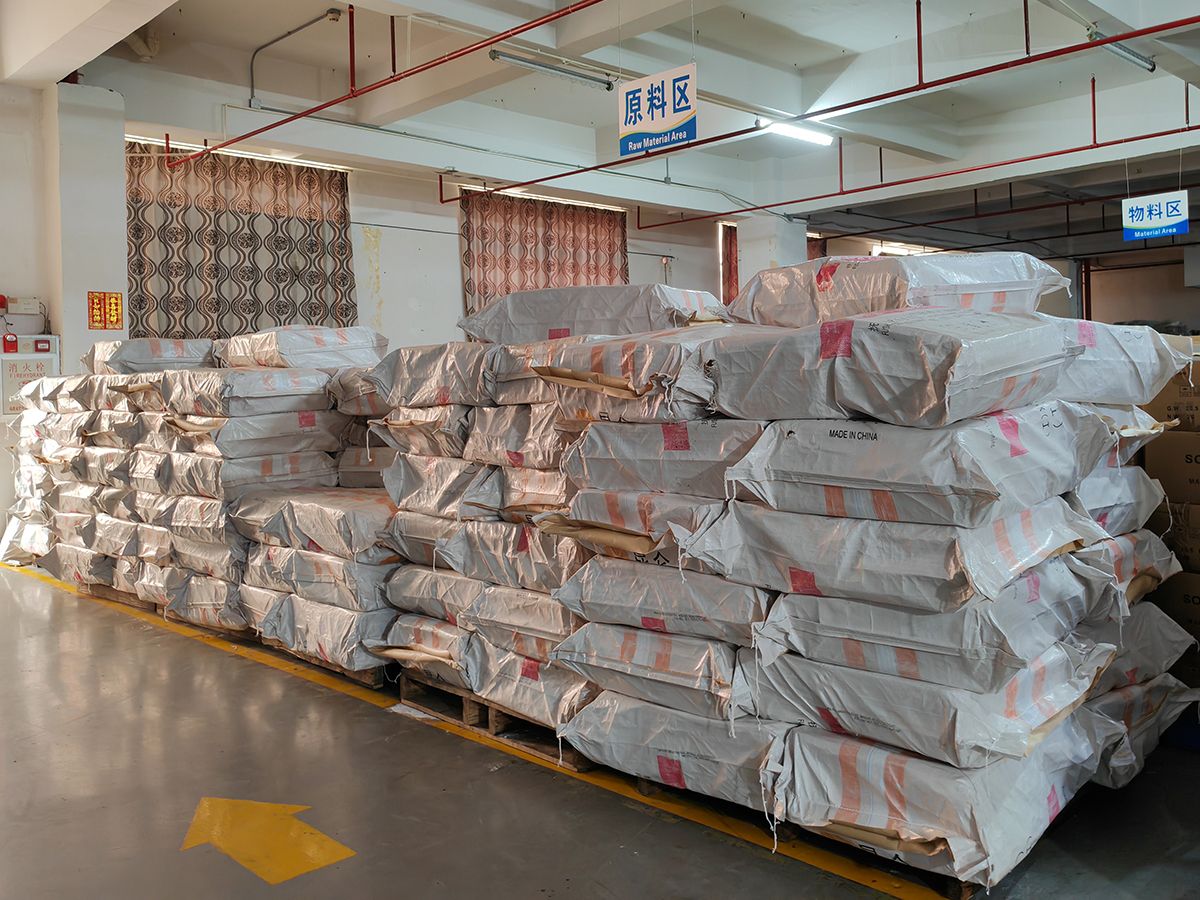
Seven pouring lines, 2,000 m² and 56 people. These are photographs of the floor your order runs on.
What Buyers Ask About the Factory
Capability, capacity and what we do not do — including the one thing we get asked for most and never supply.
Can you make something that isn't in your standard range?
Usually. Every vessel can be custom-moulded from 1,000 pcs (mould fee $70-150, refunded once cumulative orders pass 3,000 sets), and beyond candles the floor also runs wax melts, reed diffusers, room sprays, scented cards and incense. Soap is the one thing we do not make.
Can we visit the factory or send a third-party auditor?
Both are welcome — your own team, or a third-party auditor such as SGS or BV. We ask for 20 days of notice so the right people and the right lines are available on the day, rather than whatever happens to be running.
How much can you produce in a month?
Around 120,000 pieces across seven production lines — one automated, six semi-automated. In Q4 the schedule fills up, which is why bulk lead times stretch from 25 to about 30 days and seasonal orders are worth booking early.
Do you sell wax, fragrance oils or empty jars?
We can — finished candles are the core business, but we also supply wax, fragrance oils and vessels on request. Say what you need in the enquiry and we will quote it separately.
How long does production take?
Sampling is 7-10 days (15-20 if a new mould is involved), bulk production 25 days, stretching to about 30 in peak season. Freight comes on top depending on sea or air.
Can I get samples before placing an order?
Yes. Two stock samples are free — you cover the courier. Custom samples are quoted with your request, because the cost depends on vessel, label and packaging. Sampling takes 7-10 days plus about a week in transit.
Put the Line to Work
Tell us the format and quantity, and we'll come back with a price, a lead time, and what we'd check before it ships.